

A comfortable run begins before the athlete starts moving. Footwear, hydration and pacing often receive the most attention, but skin preparation is also important. Nipple chafing can turn a planned long run into an uncomfortable experience when repeated shirt contact irritates sensitive chest skin.
The most effective approach is preventative. Waiting until soreness develops means the friction has already caused damage. The following steps can help runners create a reliable routine before their next session.
Start with a Kit Audit
Lay out the clothing and equipment planned for the run. Examine every item that touches or crosses the chest.
Look for:
-
Rough seams
-
Stiff printed logos
-
Internal labels
-
Zips
-
Bra edges
-
Loose fabric
-
Hydration straps
-
Heart-rate-monitor bands
-
Waterproof layers
Run a hand over the inside of the top. A seam that feels slightly rough to the fingers may feel much worse after an hour of movement.
Choose Moisture-Managing Fabric
Sweat increases the likelihood of friction. Heavy fabric absorbs moisture, moves against the chest and may stay wet for the rest of the run.
A lightweight, moisture-wicking garment can help move perspiration away from the skin. The top should fit securely without compressing the chest or limiting movement.
Cotton can feel soft when dry but often becomes heavy as it absorbs sweat. It may be adequate for a short casual jog, but many runners prefer technical fabric for longer or warmer sessions.
Test the Fit in Motion
Standing in front of a mirror cannot show how a garment behaves during running. Jog in place, swing the arms and bend forward to see whether the shirt moves across the chest.
For a more reliable test:
-
Wear the garment for an easy run.
-
Check the chest immediately afterwards.
-
Wash the garment normally.
-
Wear it for a longer session.
-
Test it under the intended hydration vest or jacket.
Do not use a new top for a race merely because it looks comfortable.
Protect the Skin Before Dressing
Skin-protection products work best before friction begins. Start with clean, dry and unbroken skin.
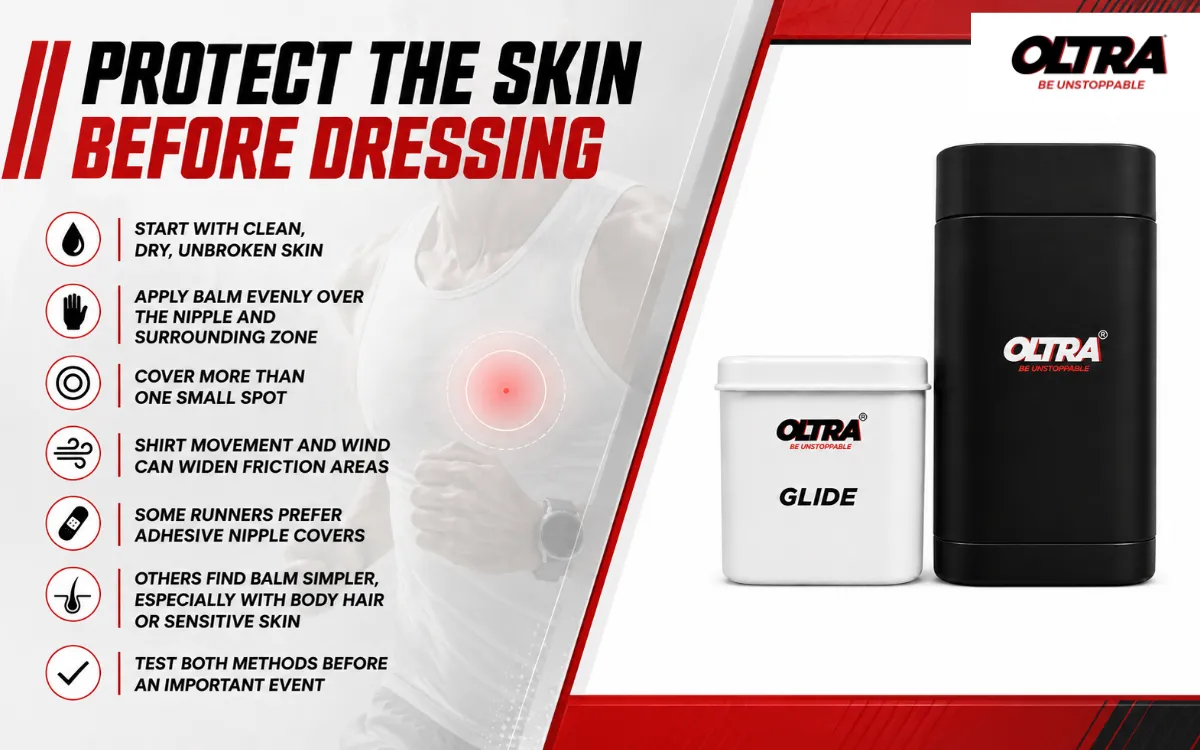
Apply an anti-chafe balm evenly over the nipple and surrounding contact zone. A small, narrow application can miss areas reached when the shirt shifts during arm movement or wind.
Some runners prefer adhesive nipple covers. Others find a balm simpler, especially when body hair or sensitive skin makes adhesive removal uncomfortable. Both methods should be tested before an important event.
Understand Your Personal Triggers
The search phrase nipple chafing runners often treats runners as one group, but individual triggers vary considerably.
One runner may experience problems only in rain. Another may be comfortable for 10 kilometres but develop soreness after 15. Someone else may react to a particular sports-bra seam or vest strap.
Keep brief notes on:
-
Distance
-
Weather
-
Clothing
-
Protection used
-
Application amount
-
Reapplication
-
Post-run symptoms
Patterns become easier to identify after several sessions.
Plan Around the Weather
Environmental conditions should influence preparation.
On hot days
Expect heavier perspiration. Wear the lightest suitable top and apply protection before leaving home.
In humid conditions
Evaporation is slower, so clothing may remain damp for longer. Carry a reapplication option on extended runs.
In rain
Use a garment that remains relatively light when wet. Check whether a jacket presses the top more firmly against the chest.
In cold weather
Wear a smooth base layer and ensure that the fabric does not contain raised seams over the nipple area.
Advice for nipple chafing runners should therefore be adjusted to the conditions rather than followed as one fixed routine throughout the year.
Check Hydration Equipment
Hydration packs and running vests can change the way a shirt sits. Chest straps may pull fabric tightly against the nipples or create sideways movement.
Test the vest at the expected race load, including water, food and spare clothing. An empty vest may fit differently from a fully loaded one.
Tighten the straps enough to prevent bouncing but not so much that they create pressure. Recheck the fit after drinking because the pack’s weight distribution will change.
Pack a Small Emergency Kit
For a longer run, carry basic items that allow early action.
A compact kit may include:
-
Anti-chafe balm
-
Body-safe adhesive covers
-
A clean dressing
-
A soft tissue
-
A spare lightweight top
-
A small sealable bag for wet clothing
The goal is not to carry a full first-aid kit. It is to have a practical response available before mild rubbing becomes severe.
Respond to the First Warning Sign
Tingling, warmth and localised sensitivity are early signals. Stop briefly and check the garment.
Possible immediate adjustments include:
-
Smoothing a folded seam
-
Repositioning a strap
-
Changing a wet top
-
Applying more protection
-
Adding a suitable cover
-
Shortening the session when pain is increasing
Ignoring the problem rarely makes it disappear. The friction usually continues for as long as the movement continues.
Avoid Applying Products to Damaged Skin
A preventative balm is not automatically suitable for broken, bleeding or infected skin. Read the usage instructions and avoid putting ordinary cosmetic products into an open wound.
When chafing has already occurred, gently clean and dry the skin. Reduce further rubbing and allow it to recover.
Professional medical advice is appropriate if there is discharge, spreading redness, fever, increasing swelling or persistent pain. Unusual nipple changes that occur outside running also require assessment.
Why Choose Oltra Before a Run?
Oltra develops natural wellness products for people who move through sport, travel, work and everyday activity. Oltra Glide combines a direct applicator with replaceable 40g refills, helping reduce the need to discard the full container when the balm runs out. Its formula is certified plant-based and includes ingredients such as coconut oil, sunflower wax, shea butter and jojoba oil. It is vegan, cruelty-free and made without petroleum, parabens or aluminium.
Anyone researching how to stop nipple chafing while running can apply Oltra Glide to intact friction-prone skin before dressing. The Core version offers an unscented option, while the refillable format suits runners who want a product they can use regularly across training and race preparation.
Use the Same Routine Every Time
The best prevention routine is not necessarily complicated. It simply needs to be tested and repeated.
Choose suitable clothing, apply protection to known hotspots, check the weather and monitor early sensations. When those steps become as normal as tying running shoes, chest discomfort is far less likely to disrupt the next session.